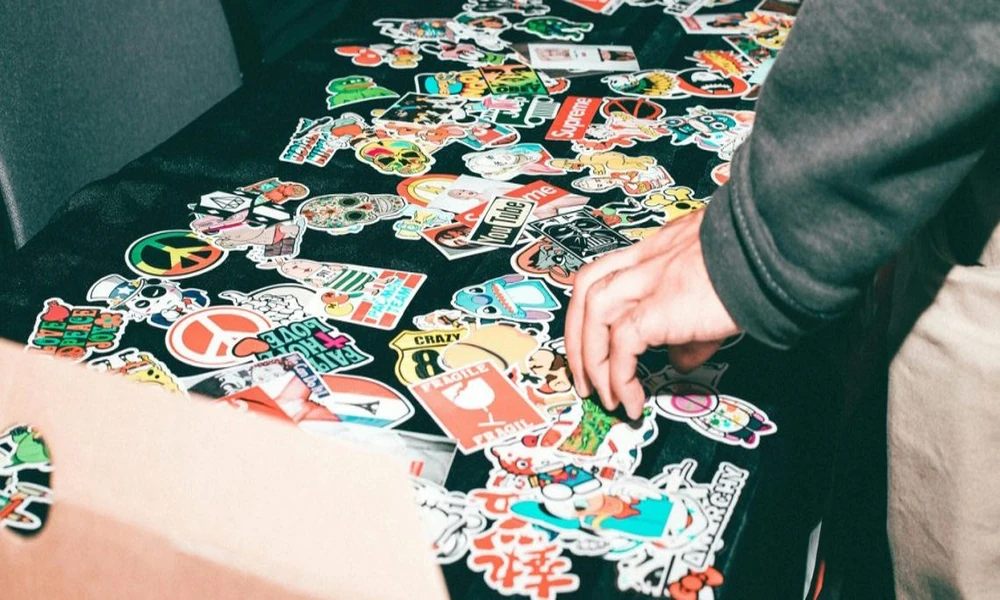
Walk into a gift shop, a bookshop or even a surf store and there’s a good chance you’ll find a rack of stickers near the till. It’s not an accident. Stickers take up almost no space, sell at a low price point, and are easy to add to a basket on impulse.
For retailers, they can be a surprisingly useful product line. Here’s why they work, what to look for when buying, and how to price them sensibly.
Why Stickers Earn Their Space
Floor and shelf space is precious in retail. A small spinner or wall rack of stickers can hold a large range in very little room. They don’t spoil, they’re light to ship, and they suit almost any shop with a strong theme or local identity.
They also work as an entry point. A customer who isn’t ready to buy a T-shirt or a print might still pick up a sticker. That small purchase can turn into a returning customer.
Why Vinyl Specifically?
Customers increasingly put stickers on things that get handled: laptops, phones, water bottles, notebooks, skateboards. Paper stickers can tear or wear quickly in that kind of use. Vinyl is more flexible and generally tougher, which is why many shops choose to stock wholesale custom vinyl stickers rather than paper.
That said, not every vinyl sticker is equally durable. The specific vinyl, the ink and whether there’s a protective laminate all make a difference. Ask your supplier exactly what the product is designed to handle before you describe it to customers as waterproof or outdoor-safe.
Choosing Designs That Sell
The designs matter more than anything else. A few approaches that tend to work in retail:
- Local pride: your town, landmarks, local slang or inside jokes
- Niche hobbies: hiking, books, coffee, cats, gaming, gardening
- Humour: short, punchy phrases that people want to show off
- Seasonal ranges: holiday or summer designs that refresh the display
Many retailers commission their own artwork, either from staff or local illustrators. That gives you designs customers can’t find elsewhere, which is a big advantage.
Sourcing in Bulk
Buying in volume brings the cost per sticker down a lot, which is what makes the margins work. Some retailers order custom printed stickers wholesale in mixed designs, choosing larger quantities of proven bestsellers and smaller runs of new designs to test.
- Material and laminate options
- Whether die-cut shapes cost extra
- Minimum quantities per design
- Whether you can mix designs in one order
- Lead times for reorders
Always order samples before committing to a large run. Seeing the colour, thickness and cut quality in person helps you price and display them properly.
How to Price Stickers
There’s no single correct price, but a simple process helps.
1. Work out your true cost
Include the sticker cost, shipping, any packaging such as backing cards or sleeves, and a share of display costs.
2. Look at your market
Check what similar shops in your area charge. Tourist areas and specialist stores can often support higher prices than general retailers.
3. Set a margin you’re comfortable with
Stickers usually have a low unit cost, so even a modest price can leave a healthy margin per piece. Many shops price them as an easy “add-on” item that doesn’t need much thought at the till.
4. Consider bundles
Offers like “three for a set price” encourage people to buy more than one and help clear slower designs.
Display Tips
- Keep stickers near the till for impulse buys
- Use clear labels for prices
- Group them by theme so browsing is easy
- Refresh the display regularly so returning customers see something new
Packaging each sticker on a small backing card with your shop name adds a professional touch and makes them easy to hang.
Avoiding Overstock
The biggest risk with stickers isn’t cost, it’s dead stock. Track which designs sell in the first few weeks and reorder those, rather than repeating the full range. Retire designs that sit untouched for months, or use them as free add-ons with larger purchases. Keeping the range fresh and lean usually works better than a huge display of designs nobody picks up.
Final Thoughts
Stickers are small, but they can pull their weight in a retail store. Choose durable materials that suit how people use them, focus on designs with a clear audience, buy in sensible quantities, and price them as an easy add-on. Done well, that little rack by the till can become one of the most reliable sellers in the shop.