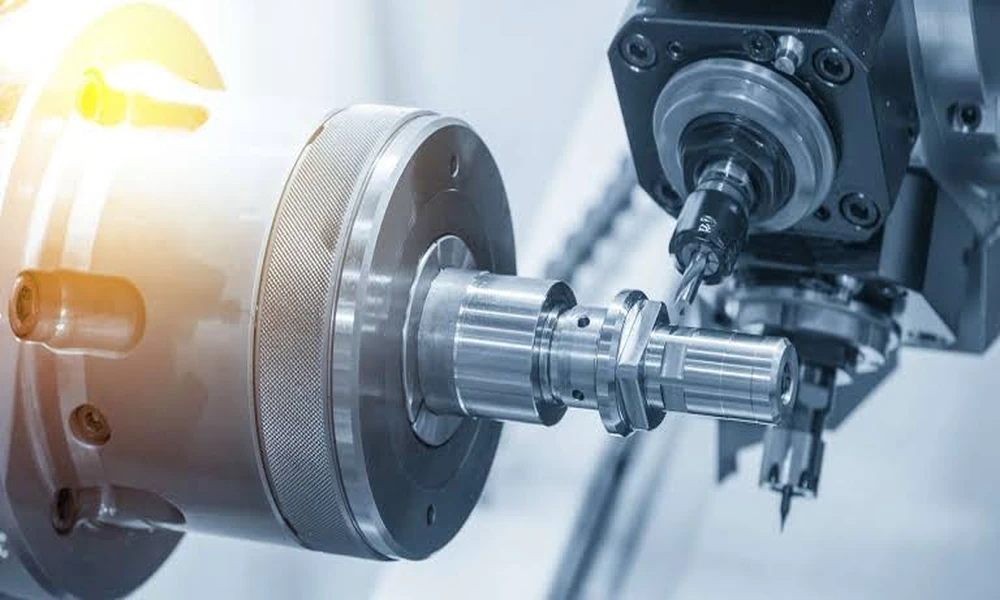
Computer-controlled machining has become an important part of modern manufacturing, allowing manufacturers to produce components with detailed geometries and repeatable dimensions. CNC technology uses programmed instructions to control cutting tools and machine movements, reducing reliance on manual positioning for many production operations. The technology is used across numerous industrial applications where consistency, precision, and efficient production are important.
What Computer-Controlled Machining Brings to Production
Within a cnc machine shop Dallas, computer-controlled equipment may be used for milling, turning, drilling, and other machining operations. Instead of manually controlling every movement, machinists create programs that direct the machine according to engineering specifications.
This approach supports consistent production and allows complex designs to be translated into physical components. Depending on the equipment available, manufacturers can work with different materials, component sizes, and geometric requirements.
CNC machining can also make repeated production work more manageable because the same programmed instructions can be used for multiple parts, subject to appropriate setup and quality checks.
Improving Repeatability and Dimensional Accuracy
Repeatability is one of the major advantages of CNC machining. When multiple components need to conform to the same specifications, computer-controlled movements help maintain consistency from one part to another.
Dimensional accuracy depends on more than programming alone. Machine condition, tooling, material characteristics, workholding, cutting parameters, and inspection procedures can all affect the final result.
Tolerances specified on engineering drawings determine how much dimensional variation is acceptable. Parts requiring particularly tight tolerances may demand careful setup, specialized tooling, controlled machining conditions, and detailed measurement.
Common Applications Across Different Industries
CNC machining supports a wide range of industries. Aerospace manufacturers may require precision components with complex geometries, while automotive companies can use machined parts for assemblies, tooling, and specialized equipment.
Energy and industrial businesses also rely on machined components for equipment maintenance, production machinery, and replacement parts. In Houston, a cnc machine shop Houston may work on projects connected to the region’s extensive energy, petrochemical, maritime, and industrial sectors.
Medical equipment, automation, electronics, transportation, and general engineering are additional areas where CNC-manufactured components may be required.
Understanding Equipment, Tooling, and Programming
Different machining tasks require different equipment. CNC mills are commonly used to cut features into stationary workpieces, while CNC lathes rotate material as cutting tools shape cylindrical components.
More complex designs may require multi-axis machinery capable of approaching a workpiece from multiple directions. Tool selection is equally important because cutters must suit the material, geometry, tolerance, and machining operation.
Programming translates design information into instructions that the machine can execute. Proper toolpaths help manage cutting movements, machining time, surface quality, and tool wear.
Factors That Influence Machining Results
Several factors can influence the quality of a finished component. Machine calibration and maintenance help maintain accuracy, while appropriate work holding prevents unwanted movement during cutting.
Material properties also matter. Different metals and plastics respond differently to heat, cutting forces, and tooling. Cutting speed, feed rate, depth of cut, and coolant use may therefore need to be adjusted according to the material and operation.
Inspection provides another important control point. Measuring finished components against engineering specifications can identify dimensional variations and help verify that production requirements have been met.
Connecting Technology with Manufacturing Requirements
Computer-controlled machining combines digital programming, precision equipment, tooling expertise, and quality control. Its effectiveness depends on how these elements work together throughout the manufacturing process.
Understanding the technology helps manufacturers communicate more effectively about component requirements and evaluate whether a machining process is appropriate for a particular application. Reviewing equipment capabilities, tolerances, materials, programming requirements, and inspection practices provides a practical foundation for planning precision manufacturing projects.