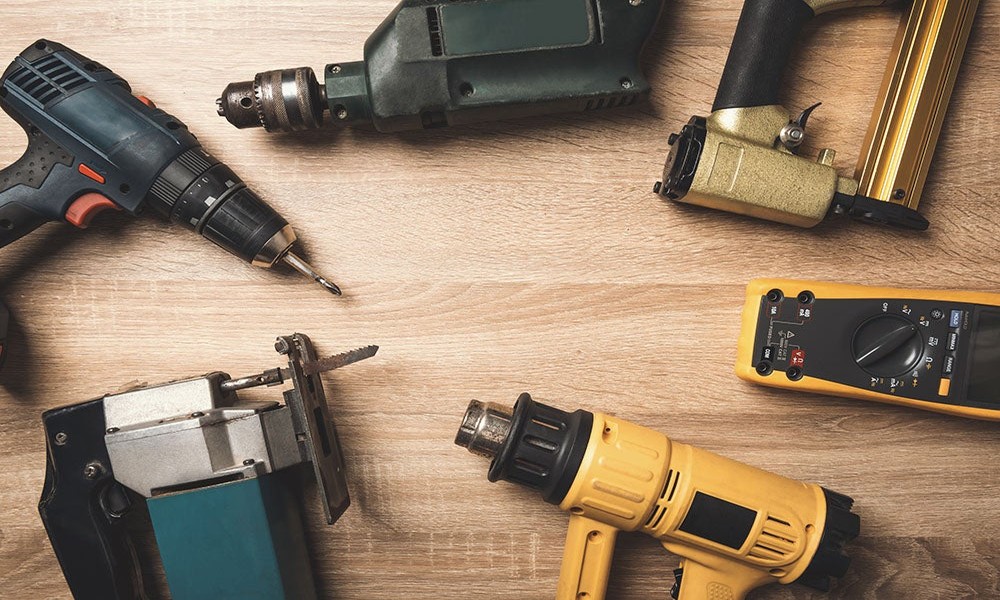
Back in the day, a lineman tools kit was a test of endurance. You had your d-ring belt, a heavy set of lineman equipment, and manual Crimpers that required the forearm strength of a blacksmith. While those traditional hand tools like pliers and skinning knives will never go out of style, the modern pro is leaning heavily into electrification.
Today’s “daily carry” for a lineman often includes:
- Lineman Impact Wrenches: No more swinging a heavy hammer or cranking a manual wrench while hanging 40 feet in the air.
- Battery-Powered Cutters: Capable of slicing through ACSR (Aluminum Conductor Steel Reinforced) like a hot knife through butter.
- Electrical Hot Stick: Now often compatible with modular battery attachments for testing and operation.
- Speed Systems Cable Prep Kit (CPK-4): This is the gold standard for URD (Underground Residential Distribution) work. The CPK-4 allows for precision stripping and scoring that protects the cable’s integrity far better than old-school “hacking” methods.
What are the Benefits of Battery-Powered Tools?
Why the switch? Is it just about making life easier? Not quite. It’s about safety, speed, and precision.
1. Reduced Physical Strain: A study on lineman ergonomics found that “musculoskeletal disorders” (basically, wearing out your joints) are the leading cause of early retirement in the trade. Battery tools take the “oomph” out of the equation. Instead of pumping a hydraulic handle 50 times to make one crimp, you pull a trigger once.
2. Increased Speed: Time is money, especially during a storm restoration. Battery-powered lineman equipment allows crews to clear faults and restore power 30-40% faster than manual methods.
3. Accuracy and Consistency: Modern Crimpers have built-in pressure sensors. They won’t release until the exact PSI is reached, ensuring a perfect connection every time. This reduces the risk of “hot spots” or line failures down the road.
The Main Advantage: Battery vs. Corded Electrical Tools
You might ask, “Why not just use corded tools? They have infinite power, right?” Well, in the utility world, a cord is more than just a nuisance-it’s a hazard.
The main advantage of using battery-powered tools rather than electrical (corded) ones is mobility and safety. Imagine being in a bucket or climbing a pole in the middle of a rainstorm. The last thing you want is a 100-foot extension cord trailing behind you, creating a trip hazard and, more importantly, a potential path for electricity to ground. Battery-powered tools are “closed systems.” They don’t need a generator hum in the background or a tangled web of cords. This “grab-and-go” capability is why lineman accessories like magnetic tool holsters for batteries have become so popular.
What Type of Battery is Used in Power Tools?
In the modern era, the heart of every Lineman Impact Wrench is the Lithium-Ion (Li-Ion) battery.
Before Li-Ion took over, we had Nickel-Cadmium (NiCd), which were heavy and suffered from “memory effect” (where they’d lose capacity if you didn’t drain them fully). Modern Li-Ion batteries are a different beast:
- High Energy Density: They pack more “juice” into a smaller, lighter package.
- Zero Memory Effect: You can top them off at lunch without ruining the battery.
- Cold Weather Performance: Essential for those 2:00 AM winter outages, Li-Ion holds its voltage better in the cold than older tech.
Most professional-grade lineman tools now run on 18V or 20V platforms, with some heavy-duty cutters moving into the 60V range to provide the raw torque needed for heavy transmission work.
Essential Lineman Accessories and Prep Kits
While the “power” tools get the glory, the speed systems cable prep kit (specifically the CPK-4) is the unsung hero of the underground crew. When you’re prepping high-voltage cable, the margin for error is zero. The CPK-4 includes specialized tools like the 1542-2CL Stripper and the 1700SS Semi-Con Scorer.
Using these in tandem with battery-powered lineman accessories ensures that the cable is stripped to the exact millimeter. It’s like the difference between using a chainsaw and a scalpel-both cut, but only one is right for the delicate surgery of a primary elbow installation.
Conclusion
The transition to battery power isn’t just a trend; it’s a total revolution in how we keep the lights on. From the versatility of Lineman Impact Wrenches to the precision of the CPK-4 prep kit, these tools are making the job safer and the grid more reliable. For the modern lineman, having a high-quality lineman tools kit backed by reliable battery tech isn’t just about working harder-it’s about working smarter so you can head home at the end of the shift with your joints intact and the job done right.
FAQs
1. Can battery-powered tools handle the torque required for pole hardware? Absolutely. Modern Lineman Impact Wrenches can deliver over 500 ft-lbs of torque, which is more than enough to seat a bolt in a treated pine pole or break loose a rusted nut on a transformer.
2. How long does a battery typically last on a storm restoration shift? With high-capacity (5.0Ah or 8.0Ah) batteries, a lineman can usually get through a standard 8-12 hour shift of intermittent use. Most crews keep a bank of chargers in the truck cab to rotate spares.
3. Are battery tools safe to use in the rain? Most professional lineman equipment is rated with an IP (Ingress Protection) scale. While you shouldn’t submerge them, they are designed to handle the “wet and nasty” conditions common during emergency repairs.
4. Why is the CPK-4 kit so important for underground work? The speed systems cable prep kit prevents “nicking” the conductor. Even a tiny scratch on the wire can create a point of high electrical stress, leading to a cable failure months down the line.
5. Is it worth upgrading my old manual crimpers to battery ones? If you value your shoulders and elbows, yes. The “trigger-pull” action of battery Crimpers eliminates the repetitive strain of manual pumping, which is a leading cause of long-term injury in the trade.