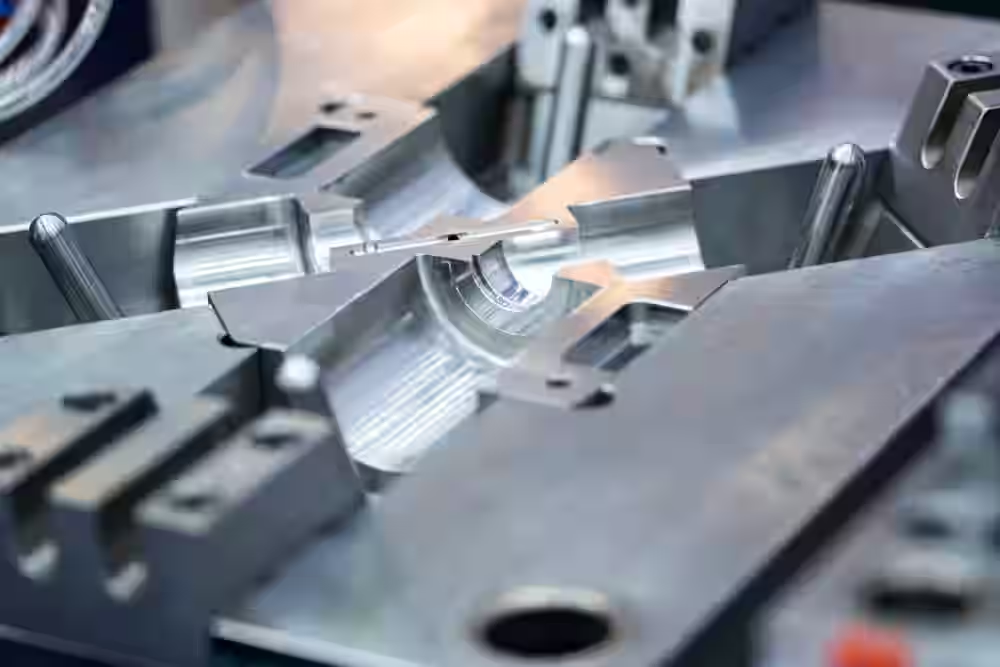
Skilled production work often begins with a clear idea shaped into a steady action that guides each stage toward reliable form. This opening line sets a stable tone for the subject while placing the first vietnam gravity casting, in a smooth and natural way. Each sentence keeps simple words to help readers follow the process without strain, which supports a clear understanding of controlled flow work.
Core Actions That Shape Reliable Casting
Reliable work starts with tidy steps that guide metal toward steady form. Each stage must follow a plain rule so the flow stays even. With this steady pattern, makers can shape parts with strong structure.
What Controlled Flow Achieves for Makers?
Controlled flow leads metal through the mold with calm movement that forms accurate parts. This method helps workers avoid sudden shifts that disturb the shape. Makers gain clarity through this steady motion, which lifts the success rate.
How Precision Builds Consistent Output?
Precision sits at the center of quality metal shaping.
- Steady pour speed keeps form stable with vietnam gravity casting placed as the key method
- Smooth mold filling reduces rough sections
- Controlled cooling supports the set shape
These points guide workers toward a clear pattern that creates trustworthy parts each time.
Key Steps Behind Strong Metal Form
Strong metal form depends on clear steps that shape the casting path.
- Accurate mold work supports clean edges
- Careful heating builds smooth melt
- Measured settling helps remove surface flaws with unique detail
These actions build a chain of steady movements that lead to dependable output.
Where Flow Methods Improve Quality?
Flow methods bring order to the casting path through simple control. Makers rely on this pattern since it keeps the shape firm without strain on the mold. Each section of the part gains clear form due to this steady movement.
Why Makers Prefer Controlled Pour Systems?
Many workers choose controlled pour systems since these steps remove guesswork. The smooth motion supports quiet accuracy that reduces rework. This process also guides the metal through a calm path so defects stay low.
Casting Process Insight Table
| Process Step | Purpose | Result |
| Heat stage | Brings metal to melt point | Smooth flow into mold |
| Pour phase | Moves liquid steadily | Clear shape formation |
| Mold fill | Directs material spread | Full cavity coverage |
| Set stage | Allows metal to firm | Strong lasting part |
| Release step | Removes shaped piece | Clean final surface |
Clear Path Ahead
Strong metal work grows from simple steps shaped with patient control that guides each stage toward a steady result. Makers who use clear flow patterns gain parts with firm edges shaped through calm motion that supports long use. Steady actions build trust in the process, which leads to reliable forms without excess revision. Each point shared above helps workers shape better parts through plain rules that lift quality in a consistent way.
FAQ
1. What helps form a stable part?
A steady pour creates a clear path.
2. Why is mold accuracy important?
It guides the shape with firm lines.
3. How does flow control support results?
It keeps the metal movement smooth.
4. What stage affects firmness most?
The set stage decides overall strength.
5. Why choose controlled methods?
They reduce flaws through even motion.