NTL Storage has operated in Singapore’s industrial sector for more than two decades, installing racking systems in warehouses across Yishun, Jurong, Woodlands, and other industrial estates that form the backbone of the city-state’s manufacturing and logistics economy. To understand what the company actually does requires looking past the marketing language about “space solutions” and examining the hard realities of Singapore’s industrial property market.
The story begins with a simple fact: Singapore has 728 square kilometres of total land area. Of this limited territory, approximately 12% is designated for industrial use. Within this constrained space operates one of the world’s busiest ports, sophisticated manufacturing clusters producing everything from pharmaceuticals to semiconductors, and logistics operations serving markets across Southeast Asia. The mathematics are unforgiving.
The Property Squeeze
Industrial land in Singapore sells for prices that would seem absurd anywhere else. Recent transactions in established industrial estates have recorded values exceeding $400 per square foot of land. Rental rates for warehouse space range from $1.80 to $3.50 per square foot monthly depending on location, specifications, and market conditions.
These figures create a particular kind of pressure. A business leasing 10,000 square feet at $2.50 per square foot pays $25,000 monthly or $300,000 annually for the privilege of having a roof over its inventory. For a company operating on net margins of 10%, this requires $3 million in annual revenue just to cover rent.
NTL Storage entered this environment in the early 2000s, a period when Singapore was already facing industrial land constraints but before the massive price escalation of the past decade. The company claims “with 20+ years of experience, our company provides full-service storage and space solutions, from analysis to installation, across racking, mezzanines and more.” What this means in practical terms is that they install metal frameworks that allow businesses to stack inventory vertically rather than horizontally.
The Vertical Solution
The technique is straightforward. Standard warehouse ceiling heights in Singapore range from 8 to 12 metres. Most businesses, when left to their own devices, store inventory no higher than 2 to 3 metres because that is the reach of standard forklifts and the comfortable working height for warehouse staff. This leaves 5 to 9 metres of vertical space unutilised.
NTL Storage systems exploit this wasted volume through various configurations:
Selective Pallet Racking
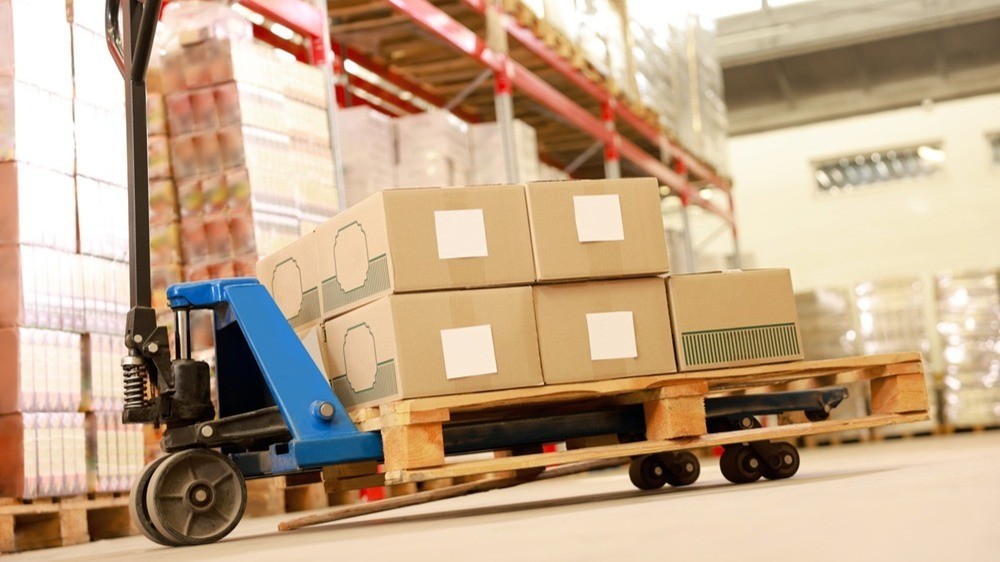
Steel frames and beams creating multiple levels of storage, with each pallet accessible independently
Very Narrow Aisle Systems
Specialised racking that reduces aisle width to as little as 1.6 metres, requiring specific handling equipment but increasing storage density by 40% to 50%
Mezzanine Platforms
Essentially constructing a second floor within the existing warehouse structure, supported by steel columns and accessed by staircases
Drive-In and Drive-Through Racking
High-density storage where forklifts drive directly into the racking structure, suitable for bulk storage of identical products
The installations are not cheap. A comprehensive racking system for a 10,000 square foot warehouse might cost $80,000 to $150,000 depending on specifications, height, and complexity. Yet businesses pay these sums because the alternative costs more.
The Real Mathematics
Consider a pharmaceutical distributor operating from 8,000 square feet in Woodlands. The business has grown, inventory has expanded, and the current space no longer suffices. Management faces a choice: lease an additional 4,000 square feet or install a racking system that increases storage capacity within the existing premises.
Additional 4,000 square feet at $2.20 per square foot monthly costs $8,800 monthly or $105,600 annually. Over five years, this amounts to $528,000 in rental payments with nothing to show for it at the end except receipts. A mezzanine installation costing $120,000 provides similar additional capacity but becomes a capital asset. The payback period is approximately fourteen months, after which the business saves $105,600 annually in avoided rental costs.
These calculations drive decisions in Singapore’s industrial sector. The numbers are too stark to ignore.
The Safety Question
What the promotional materials rarely emphasise is that racking systems create their own risks. Improperly designed or installed racking can collapse, crushing inventory and killing workers. Singapore’s Ministry of Manpower maintains records of such incidents, though companies involved typically settle claims quietly to avoid publicity.
Racking systems must be engineered to specifications that account for load weights, seismic considerations, forklift impact forces, and safety factors. The Workplace Safety and Health Act makes building owners and occupiers liable for ensuring racking systems meet regulatory requirements. Inspections are mandatory. Documentation must be maintained.
NTL Storage states that their “dedication to service excellence and client satisfaction has made us a trusted partner helping businesses islandwide optimise their spaces.” In practical terms, this means they provide engineering documentation, comply with regulatory requirements, and presumably carry adequate liability insurance. These are not luxuries but necessities in Singapore’s tightly regulated industrial environment.
The Broader Context
Singapore’s industrial storage situation reflects larger economic forces. The government’s land use policies deliberately constrain industrial space to drive efficiency and push businesses toward higher-value activities. Cheap, inefficient warehousing is not part of the national economic strategy. Businesses that cannot optimise space utilisation face pressure to relocate to neighbouring Malaysia or Indonesia where land costs less.
This creates a permanent market for space optimisation services. As long as Singapore maintains its current industrial land policies, and as long as businesses find it advantageous to operate from Singapore despite high costs, companies will pay substantial sums to extract maximum utility from limited warehouse volume.
The racking systems installed across Singapore’s industrial estates by NTL Storage and others represent a physical manifestation of economic geography, a visible demonstration that in a small, expensive city-state, the only direction to expand is upward.